Monday, March 12, 2007

DST and Me (also, Microsoft Screws Up)

I
have long had a love-hate relationship with Daylight Saving Time.

Despite my love of snowboarding, summer is by far my favorite season (and the solstice my favorite day of the year). As Alicia Bridges sang, I love the night life--but I love the late evening summer sun even more. In the days when I used to play a lot of ultimate frisbee, I cherished the month or so a year when the combination of long summer days and DST until nearly 9.

And to celebrate the first workday of DST (and to keep Robert Karl from bothering me about my carbon emissions), I was elated to ride my bike to work yesterday.

But my relationship with DST isn't all roses and lilacs.

At my old company, Energy Interactive, I was tasked with designing a database that stored lots of time-series data--electric usage metered every 60, 15, 5, or 1 minute. The database had to be efficient, performant, and had to store data and retrieve data from different time zones.

And, thanks to the wonder of Daylight Saving Time, it had to deal with one 23-hour day and one 25-hour day per year. That wasn't such a big deal, of course, because I did what any right-thinking database designer would do: I stored all of the data based on GMT. GMT doesn't change, GMT doesn't have 23-hour days, GMT can help you through all sorts of time zone issues. The only trick is that you have to translate any local times into GMT when you import data (and back again if you're going to display it, bill on it, etc.).

The modules I wrote back then were heavily dependent on the time functions built into the Microsoft Visual C runtime library. They were sometime a pain to work with (especially with differing time zones), but they were invaluable.

This year, however, my relationship with DST took a decided turn for the worse.

As everyone knows by know, the Energy Policy Act of 2005 decreed that the start and end dates for Daylight Saving Time were changed this year--that meant that my wife, who still works at my old company and had the grave misfortune of inheriting my old code, was responsible for updating all of the modules to function correctly with the new definitions of DST.

It didn't seem like a big deal, right? Microsoft would release a new version of MSVCRT.DLL, she'd perform some testing to verify it, and everything would be peachy.

Well, it didn't work that way. Over the last few weeks, Microsoft had released patches to all of their operating systems, and a patch to .NET (albeit a buggy one)--however, MSVCRT.DLL wasn't updated.

Cindy played a game of chicken with Microsoft, hoping that eventually they'd release a new version.

Finally, last week, she blinked. She gave up hoping that they'd release a new MSVCRT.DLL, and she spent every night last week coming up with her own fix: writing code that would ensure that, for all time zones and for all years, her software would work properly.

And then she came into work on Monday and found this: On Friday, Microsoft had released a patch to MSVCRT.DLL.

Yep, a full 36 hours before the DST event.

What does this mean? It means that now she may have to undo her code changes (she tried to anticipate this in her code of course), and she'll definitely have to re-QA everything.

Microsoft, along with everyone else in America, has known about this change for 2 years. Leaving developers hanging until the day before the event was simply inexcusable.

Technorati tags: ,

Friday, March 09, 2007

Scobleized!

T
hree of us headed down to PodTech's palatial offices in Palo Alto yesterday to spend a little time with Robert Scoble. John and Rob did a half-hour interview on camera, then I did 10 minutes of show and tell using some of our demos (I even showed some code, which must have felt very Channel 9-y to Robert; he doesn't seem to do that now that he's in the heart of Web 2.0land instead of in the middle of Redmond).

Digipede may be a bit more "enterprisey" than most things he covers, but he's still geeky enough to appreciate a powerful software development tool when he sees one.

Scoble says it'll be take 3 weeks to get the interview up (and, given that he's headed to SXSW today, I bet it could take even longer than that!).

Technorati tags:

The Long Tail of Distributed Computing


I
nsideHPC is by far the most prolific of the HPC blogs I follow. John E. West only started the site about 2 months ago, but he seems to post more than once a day with informative, HPC-related information.

And he still finds time to comment on other blogs!

He left a couple of interesting comments on my previous post; as my response grew lengthier, I decided I need to put together yet another post. (I'm going to pull liberally from my own comments to that post)

As part of his comment, John said to me...
I would be interested to know whether you've looked at research that groups like the IDC (and their HPC User Forum) may have done to accurately survey the parallel jobs mix.
I don't know that I've read about the parallel jobs mix, John, but I have seen their growth numbers. Until a few years ago, most of the sales of HPC were in the category they call "capability" class systems--the very largest clusters and supercomputers, costing well over $1,000,000 per sale. Things below that were either "enterprise" or a smaller a category called "capacity."

What's happened since then? Well, that category called "capacity" got so big (over half of HPC sales), IDC had to break it into three separate categories--divisional, departmental and workgroup. It accounts for over half of all HPC sales, and it is growing much, much faster than the larger systems.

This jibes exactly with what we hear in the market, and what we hear from our partners. The smaller systems are growing, and growing at an amazing rate.

And there's one other factor here: IDC isn't counting a lot of sales here.

According to IDC, the work that my financial customer does on their, say, 300-processor grid isn't HPC at all. Every night they may consume over 3000 CPU Hours performing their analysis, and sometimes just as much during the work day. I realized it's paltry by the standards John is talking about (1,000,000 CPU-hour jobs), but in corporate America it's nothing to sneeze at.

However, according to IDC's definition, this isn't HPC. It's production work, and therefore they put it in a different category. When IDC presents its sales numbers for 2007, the 200 servers (800 procs) this customer buys this year won't be counted as HPC server sales--they'll be regular, old enterprise server sales. The software they buy from us? Enterprise software, not HPC software.

The problem is that the line between HPC and enterprise computing is not a line at all; it's a big, blurry continuum. For their jobs, IDC needs to draw a line somewhere--and nearly all of our customers' purchases fall on the "enterprise" side of the line. That's fine with me--IDC's classification of my company's sales doesn't affect our bottom line!

IDC's definition of HPC is a traditional definition, and it happens to be centered around scientific and engineering applications. That's not surprising--that's where HPC came from, and IDC is one of the few organization that is honestly trying to come up with accurate HPC numbers.

The thing is, it's easy to classify those huge, megamillion-dollar supercomputers as HPC. They're easy to identify, they're easy to classify (and there aren't really that many organizations that either need them or have the ability to pay for them). It's harder, however, to determine how every 128-, 64-, and 32-node cluster is being used.

I think of it as the long tail of distributed computing. Only, unlike Chris Anderson's famous "long tail" of products, where the bulk of sales is in the many, less-popular products--the long tail of distributed computing is that the bulk of distributed computing sales are in the hundreds of thousands of smaller installations.

I'm not trying to say that there aren't lots of engineering problems out there that require zillions of tightly coupled processors. There are thousands of science and engineering firms out there who need the capabilities of traditional HPC.

I am trying to say that there are hundreds of thousands of companies out there that do reporting. Analysis. Content creation. Content repurposing. None of those companies will ever have a million CPU-hour job. But millions of them will have 1 CPU-hour jobs (the kind that a 5 node grid gets done in 12 minutes!). And nearly all of those companies are outside the science and engineering realm.

The long tail of distributed computing is rich and varied indeed. And it's growing longer every day.

And why is that exciting? I'll close with a quote I pulled from John E. Wests's comment:
...out of a million new users of HPC, someone uses the power of computing to do what HPC does: change a technology, a community, or the entire world.

The things I'm championing on the scientific side resonate deeply with what you're doing on the enterprise side: reduce the barriers to entry so that everyone has a chance to get at these capabilities.
Exactly, John. HPC or not, distributed computing lets people do things that individual machines could never accomplish.

Wednesday, February 28, 2007

It's a Delightfully Parallel World


T
  raveling every week so far in 2007 has had a major impact on my blogging frequency--I haven't had time to read my feeds in weeks, let alone write anything. But when I started this blog in 2005, I had a goal of writing at least one post a week, and I'm determined to get back to that.

And last night, after a 12 hour day when I returned to my hotel room to start a post, how does Blogger greet me? By letting me know that Servlet NewFrontend is currently unavailable. Great. Can someone remind me why I use this service?

Now, back to our regularly scheduled program.

Spending a ton of time at customer sites this year has given me a vastly improved perspective how much demand there is for distributed computing power. I've been at a customer site where people were asking for time on a brand-new development grid because they need to get production analysis runs completed. I've seen people running from desktop machine to desktop machine starting analysis software. And, of course, the most prevalent "grid" out there: using remote desktop to access many servers, starting processes on each.

And why exactly are people using these slow, inefficient methods for getting work done? Can it even help? Of course it can. Because, after all, it's a delightfully parallel world.

Several years ago, long before Digipede had released a product but after we had decided on a feature set, we were told by one of the luminaries of distributed computing that the problem with a system like ours is that it could only solve "embarrassingly parallel" problems.

For those of you unfamiliar with the term, the term embarrassingly parallel refers to computing problems that are easy to segment for separate, parallel computation. Moreover, embarrassingly parallel problems require no communication between the various pieces of the problem.

There has long been a feeling in the academic computer science community that "embarrassingly parallel" problems aren't worth spending time on. Academics have been much more intent on solving those problems that can't be easily broken up, that require constant communication and direct memory access between processes. Fields like Finite Element Analysis and Complex Fluid Dynamics, for example, are enormously complex, require vast amounts of computing power, and have great computer science minds struggling to come up with new and innovative technologies.

While the academics have been solving these very difficult problems, they've been looking down their noses at embarrassingly parallel problems--the name itself is quite condescending.


But when you go out into corporate America, and you look at the problems that most developers are trying to solve, and you look at the compute loads that are strangling most overworked servers, you find a nasty little secret:

It's a delightfully parallel world.

That industry luminary told us that, in his estimation, perhaps 10% of computing problems might be considered embarrassingly parallel--everything else requires "real" distributed computing.

Having spent a bunch of time with customers, I think he is exactly wrong. Why? Because it's a delightfully parallel world.

Most customers out there who are adapting their software to run on a grid or cluster aren't tearing apart their algorithms, rewriting every line of code using a complex toolkit so it functions across processors. Carving an algorithm like that is amazingly difficult and requires enormous expertise.

No, customers do something far more efficient and practical: instead of trying to carve up their algorithms, they break up their data.

Say you've written a routine that can analyze the risk for a customer's portfolio--it runs for 5 seconds. If you have 1000 customers, it's going to take an hour and a half to run. Imagine you have 20 servers--you'd really like to spread that work around to get it done quicker. Now you could try to rewrite that algorithm in such a way that it uses multiple processors simultaneously, but that would involve complex technology like MPI and completely rearchitecting your routine. Here's a much easier solution: leave your algorithm exactly the way it is now, and break up the data instead. Each server analyzes 50 customers, and your analysis is done in about 4 minutes. Why was that possible?

Because it's a delightfully parallel world. Your customers' portfolios aren't dependant on each other--each can be analyzed independently.

And when you venture into corporate America, and you look at the server loads, you see that most of the analysis they are doing falls into this category.

A special effects company needs to render 50,000 frames for a scene. An electric power company needs to generate 20,000 complex bills for their largest customers. A web application needs to generate PDFs for users on the website. A bioinformatician needs to check 300 different proteins to see how well they dock on a segment of DNA. A trader needs to try 50 different trading algorithms against the history of a stock's performance.

All of these are daunting problems in terms of computing capacity--and all can be solved in parallel by dividing up the data.

Now, before the MPI-jockeys take me to task, some disclaimers: I don't pretend that every problem in the world can be divided like this, and I understand that dividing data can be a complex task in its own right. Moreover, what you guys do is really, really hard. I get that, and I'm glad you're out there solving those problems.

But for the other 90% of developers out there: don't rewrite your algorithms. Break up your data.

Because, as John Powers says, it's a delightfully parallel world!

Photo credit: Scott Liddell

Sunday, February 11, 2007

MSVCRT Update for DST?

[Update 2007-03-14 1:24pm] There's now an update to MSVCRT.DLL! Read all about it here, or go straight to the source and grab it.

B
  elieve it or not, I'm not the only software developer in my family--my wife, Cindy, has been writing software nearly as long as I have.

She's working at a company that's still supporting some products with pretty old code bases. Many of the products deal with a lot of time-series data, and they have to deal with data from different timezones.

At least some of the code utilizes the mktime, tzset, localtime, and gmttime functions in the MSVC runtime library to help translate times and time zones.

As many of you have probably heard, Congress changed the dates for daylight saving time this year. As a smaller number of you have heard, Microsoft is updating their operating systems to reflect these changes. They're also updating their newer development tools. However, it's not clear what's happening for their older customers. This page says this:
For customers who rely on the TZ environment variable for the DST information, they will get outdated DST information for 2007 and beyond (i.e., they will get DST information according to the previous system). Microsoft is currently working on a fix for this issue and will post information about its availability on the Visual Studio Support page. In the interim, developers are advised to test their applications to determine the impact of the DST update on their applications.
Wow. Ok, she's tested their applications--the old mktime functions are definitely not going to work this year. Now what? This is less than a month away, Microsoft--is this release coming sometime soon?

I know Microsoft can't support old products forever. On the other hand, they know that people make a commitment to their platform, and many people can't force their customers to upgrade software. It's also not like releasing a new MSVCRT.DLL would be a huge deal--they released a DST bug fix a few years ago.

So, all you Microsofties out there: any word on this?

Technorati tags: ,

Friday, February 02, 2007

Video: Excel Services and Grid Computing


E
  xcel Services is such a new product that many people have trouble understanding exactly what it does, why they'll need it, and why a grid computing guy like myself is always talking about it.

Simply put, Excel Services is like Excel on SOA: it lets you take the power of a spreadsheet in Excel, then make it available as a service (either through a browser or web services) to everyone in your enterprise. As I've written extensively in the past, I think it's a game-changing product.

What does this have to do with grid? Scalability. When you make something available as a service, you've got to ensure that you're ready to have many people use it at once.

As a Gold Certified Microsoft ISV partner, I was tasked to make a 5-minute video for the Office 2007 launch explaining how a grid can help ensure scalability for Excel Services and UDFs. If you're interested, check it out here on the Microsoft site. Read all about it, or scroll down and click the video link. (Note: the video link worked for me in Firefox, but not in IE 7)

Technorati tags: ,

Thursday, February 01, 2007

Turnaround: Scoble Gets It Right This Time


S
  coble lost his senses for a couple days in September, but a trip to DEMO07 seems to have straightened him out.

Responding to a post in WeBreakStuff, Scoble said then that he liked the fact that "money is a filter;" that only companies that could scrape together the $30,000 fee were allowed on stage.

I responded vociferously: Scoble Is Dead Wrong about DEMO. The filter isn't the $30K--it's Chris Shipley. As I said in my post back then:
To participate in DEMO you undergo a rigorous application process and a very critical evaluation. When my company demonstrated in 2005, there were over 700 applications--and around 70 were accepted. That's close to an Ivy League acceptance rate! Chris Shipley and the team have a great eye for technology, and you have to pass their sniff test (and outshine the competition) to get in. Their track record is fantastic (products like Palm, Java, and TiVo were all featured at DEMO in the past--prior to their great success).
Well, a trip to Phoenix seems to have changed Robert's mind. In his post yesterday, he seems to have grokked the fact that the money isn't the important hurdle:
Chris Shipley interviews each company, which means that everyone on stage has reached a certain bar and the $30,000 fee makes sure that entrepreneurs have some skin in the game.
I'll always look fondly on DEMO@15 (where we announced our product in 2005): not only did we get to demonstrate there, but it was the first time I met Robert--and the first time I started to see the value in blogging.

I wish I were there--it's an exciting event. And I'm glad to see that he's appreciating the true value in it!

Technorati tags:

Tuesday, January 30, 2007

Jim Gray Missing at Sea

A
  fter several days of traveling, most of it without internet access, I just turned on Feedburner to sync for the first time in a few days.

The first post I read took my breath away: Larry O'Brien wrote that Jim Gray is missing at sea. Information Week confirms it.

Scary. I was on campus at Microsoft yesterday and today, and Jim's name came up with both conversations.

He is a bona fide genius; more than that, he cares about helping people. Meeting him was a tremendous professional honor for me. My thoughts go out to his family.

Technorati tags: ,

Wednesday, January 24, 2007

HP and Digipede in the 425

A
  ttention all y'all in the 425/206...

On Monday, January 29th, HP and Digipede are giving a briefing in Bellevue titled--are you ready for this?--"Clusters and Grids Are Hot!"

Title notwithstanding, this is a chance to see HP's latest hardware running .NET's greatest grid computing software.

Details below. They want to know who's coming: if you're interested, shoot me an e-mail (dan AT digipede DOT net) and I'll RSVP for you. Oh, did I mention there's lunch?

What:
HP Distributed Computing Briefing: Clusters and Grids are Hot!

When:
Monday January 29th, 9:00 - 3:00 (see agenda below)

Where:
HP
14475 NE 24th St
Bellevue, WA 98007

Details
HP and Digipede Technologies will provide a briefing on the HP Unified Cluster Portfolio, featuring Microsoft's new Windows Compute Cluster Server 2003 and the Digipede Network. Attendees will learn:
How HP blade and cluster solutions are delivering value for customers today
How the Digipede Network brings the benefits of grid computing to the Windows platform
How the HP / Microsoft / Digipede offering can help you win new customers in financial services, government/defense, life sciences, energy, entertainment/media, and other growing markets.

In financial services, for example, the market for grid computing on the Windows platform is growing rapidly.

In a recent joint engagement with one of the world's top hedge funds, Digipede Technologies provided the grid computing software and services to deliver radically improved application performance. The fund's IT and development staff were faced with growing demands from traders and analysts for higher throughput in trading analytics and risk management applications. Using Digipede's unique object-oriented grid development approach, the fund was able to adapt its applications to the grid quickly and efficiently. Using the Digipede Network running on HP's high-performance hardware and Microsoft's OS, the fund deployed a grid of 80 servers, capable of performing analysis that would take days on a single machine in under one hour. The fund is adding new compute nodes to this grid every quarter.

There are hundreds of hedge funds with similar needs -- not to mention other asset managers, banks, insurance and reinsurance companies, and investment advisors of all kinds. And the market in other verticals is growing as well.

Agenda:
9:00 Welcome -- Coffee, juice and rolls provided
9:05 Intro to HP's Unified Cluster Portfolio, including CCS
9:30 Digipede and CCS
10:00 Digipede Overview
11:00 Digipede Demonstrations on Compute Cluster
- Using grid computing to improve .NET application performance
- Building "supercomputing spreadsheets" with Digipede and Excel
- Scaling out Excel Services on SharePoint with the Digipede Network
12:00 Lunch provided by HP
2:00 Discussion and Next Steps
3:00 Close

Technorati tags: , , ,

Wednesday, January 17, 2007

Another Reason IT Matters

L
  ately I've been traveling a lot. As I do so, I've been using Microsoft's Outlook Web Access increasingly. I think it's *very* well done. I had heard about it a lot in the last year (especially as Microsofties were saying things like "AJAX is nothing new, we've been doing that for years").

The UI is very, very rich for a browser application.

In the office, however, I still use the heavy, client version of Outlook--it just plain has a better UI, and it has better features. I also use the client version when I'm disconnected (on a plane, for example, or anywhere else I don't get free internet access).

I really like the option of a Thick Client when appropriate, and a Browser client when the Thick Client just isn't possible (at home on my MacBook Pro, for example).

Just now, trying to read my personal e-mail, I received another reminder of why I don't love browser-only applications:


Gmial is temporarily unavailable. I shouldn't worry; they're currently working to fix the problem.

All I can say is, thank goodness that we're not using this for corporate email!


Technorati tags:

Grid Computing Game


G
rid computing has either reached a tipping point or jumped the shark; someone has written a grid computing video game.

Ok, I'm being a little facetious--the appearance of one flash-based diversion isn't a harbinger of doom or of success. It's just a fun way to spend 2 minutes.

TryScience.org
has the game. In it, you control the world's computer grid, and you have to prioritize the grid as it solves different scientific problems. It's different than the type of grid computing that I usually write about (I'm much more interested in companies using their own machines together), but it's worth looking at.

Check it out here.

Technorati tags:

Tuesday, January 09, 2007

Wait. I thought S-O-A spelled "panacea."

T
  wo items hit my feed reader recently that served as a reminder that people still have serious misconceptions about what SOA offers.

The first was an article over at Linux.SYS-CON.com. Keven Smith and Lou Blick wrote a piece called "Avoid SOA Pitfalls!" They've got seven practical tips for designing and building an SOA within your enterprise. Their tips range from architecture suggestions to managing user expectations. What's important is that they make it clear that, if you don't follow good design and implementation methodologies, you will put your project at risk.

The bottom line? Calling a project "SOA" isn't a panacea for software success. Slapping a web service on top of an existing stove-pipe application won't make the project succeed, either. And, as they point out in tip number 7 (and as I've made clear many times), you need to think about scalability from the beginning.
At the end of the day, the users of your enterprise applications probably won't care that a SOA is in place. Users want functionality, and they don't want their applications to run at a snail's pace. As a result, your deployed systems will have to scale to meet the load required by the intended number of applications and end users. Enterprise architects will need to analyze the scalability requirements and start planning at design time, because the risks of not planning for scalability are huge - exposing a SOA to an organization that can't handle the load promises to ruin your entire project.
It's a point that I'll never stop hammering on, and I'm glad to see others making it as well. For more reading, see the article that Robert and I wrote for Dr. Dobb's last year.

The second item to hit my feed was from Glenn Cameron's dotnetSaaS blog--he summarizes a new report from Saugatuck Research (available for sale here). According to Glenn's summary, Saugatuck finds that SOA may not reach its full potential to transform businesses.

Why? They cite three key barriers: Upfront cost, resource sharing and allocation, and SOA Governance.

Resource sharing is the one that jumps out at me, because it's a key part of the benefits that grid computing can offer an SOA.

Grid addresses the scalability needs of an SOA by bringing the power of many machines to bear on your SOA computing needs (and providing a standard infrastructure for your developers to use). Furthermore, a good grid system addresses resource sharing as well. It will allow you to put policies in place that ensure that your most important processes get the compute power that they need. It will ensure fair sharing of resources as well.

Technorati tags: ,

Monday, January 08, 2007

IT Isn't Dead; It Just Moved into My Living Room

Because I'm a devoted reader of Robert W. Anderson's Expert Texture, his post yesterday was where I first learned that Windows Home Server was announced.

Robert says he doesn't want one; I'm not so sure I won't want one sometime soon. Cindy and I would love all of our music, movies, plus the ability to videochat with relatives, right from the convenience of the Ultralounge.

In any case, this is a further of example of why I think Nick Carr is wrong on the server industry dying. Servers will never die. People will constantly be thinking of new and different uses for them.

Data centers will evolve; virtualization, consolidation, and grid technologies (along with steadily improving networking) will reshape the way we use computers and will reshape the way data centers look as well.

But make no mistake: people will always find new ways to use servers.

Updated 2007-01-09 9:04: Changed phrasing to make it clear that I'm not sure about whether I will want a media server (as opposed to not being sure about whether Robert wants a media server; I'm sure he wants one). Also added a picture of my living room (the one that was redecorated on Design Remix on HGTV), possible future home to my media server.

Technorati tags:

Tuesday, January 02, 2007

The end of a meme?

E
very time one of those "tag" memes goes around the internets, I jealously watch it happening--half hoping I'll get hit, half hoping it'll go away before it hits me.

Well, while I was visiting my mom for Christmas, Jim Benson slapped me silly.

I can't help but think that, having reached this far into the blogosphere, this meme might be dead. Still--it's not so fun if these games are just for the A-Listers. I want to keep playing.

So, without further ado, here's five things you may not know about me:

  1. I spent a year touring with a rock band called Chevelle. I originally got on the tour bus for a one-week adventure with my friends in the band; I had a blast and ended up staying. After a year of being their tour manager and watching their album go platinum, I quit and came home. I got engaged just a few months after returning.
  2. I taught myself to play guitar (well, 5 chords anyway) so I could write and perform a song at my brother's wedding. I've since learned a lot more chords, but I'm still not very good. I love it, though, and play a Martin D-35.
  3. I used to play a lot of ultimate frisbee. I think it's just about the best participation team sport. High quality games, good athletes, national and international organization. I never went to nationals, but ultimate was the reason I first went to Hawaii (which I love, and where I got married).
  4. I haven't written a resume since 1990. I got hired (as a junior in college) as a programmer at Quantum Consulting as a Windows 2.0 developer. Every job since then has happened organically.
  5. I once had an argument with my dad, in the University of California-Berkeley admissions office, about why I didn't want to major in Computer Science. Though I won the argument, I graduated four years later with a degree in Computer Science (sometimes fathers know best).
Ok, I'll propagate the meme. These things are fun, and now it's my turn.


First, three bloggers whom I should have included in my pushup challenge, but somehow forgot:
Larry O'Brien
Gianpaolo Carraro
Bill Boebel

Next, a guy who is probably still wondering why I read his blog:
Jason Follas

Finally, my colleague Kim Greenlee.

You're it!

Thursday, December 21, 2006

Your New Year's Resolution

L
ast January I made the first New Year's Resolution of my life--and it was an ambitious one. Inspired by my brother, I resolved to do one pushup and one situp (ok, one crunch) on January 1st. Two of each on January 2nd. Three on January third, and so on. All the way through the end of the year. Three hundred sixty five pushups and crunches on 12/31, and a grand total of 66,795 for the year.

Several of my friends and colleagues joined me.

Well, we're 355/365ths of the way through the year. How did I do?

Very well, if I say so myself. I've missed two days this year--the day before Thanksgiving, and Big Game day (and I later made most of those up). So far, I've done over 63,000 pushups and crunches.

Of course, my body has changed a lot. I don't have huge muscles by any stretch of the imagination, but I have definition like I've never had in my life. My wife is a big, big fan of this resolution!

I also have a tremendous sense of accomplishment. I never had to do anything difficult (even now, it's only about 20-25 minutes a day, and I tend to break it into 2 sessions)--but I've accomplished a great goal. As I said back in January, I wanted to see what I could accomplish through dedication, tenacity, and an incremental increase in effort.

As for my co-workers and friends, I don't think any of them has stuck with it entirely--but they have all changed their exercise program. Even though none is doing 355 pushups with me today, they're all doing something to improve themselves.

The Challenge
This has been a great experience for me. Now, I'm challenging you. Readers. Writers. Members of the blogosphere. Mostly, people whose blogs I read: It's time to think about what you are going to resolve next year. Why not do this one?

Savas and Pirillo: I know you both lost a lot of weight in 2006--maybe you're looking to firm up those newly svelted bodies? Shahar - how about getting the Excel Services team on board? Jim Benson, your cousin Robert sure did a lot of pushups this year; think you can top him next year? Brad Feld, you certainly know a thing or two about athletic goals (50 marathons in 50 states before he's 50), I'm sure you could do this without sweating. Carl Franklin, you think .NET rocks, but did you know that pushups rock? Dan Fay, Joe Duffy, Mark Schmidt, David Gainer: they won't be calling you Microsofties in 2007. Jason Follas, think you can manage 19 pushups the second day of CodeMash? Nick Carr, IT may be dead, but calisthenics are alive and kicking! And of course: Scoble made some big changes in 2006--how about making some more in 2007?

Challenge yourselves. Challenge each other. A pushup a day, that's all it takes. Pass it on.

Disclosure: I don't know most of the people I mentioned above, other than through RSS. As far as I know, you're all completely chiseled, do 500 pushups a day, and would laugh at the idea of doing fewer. No offense intended.

The Advice
I have a couple of pieces of advice for anyone who decides to try it. First, make the "workout" part of your routine. For me, that meant setting my alarm clock ten minutes early to give myself time for pushups and crunches. Getting my pushups and crunches out of the way that early in the day makes it much easier for me; the worst days are the days when I realize that I still "owe" pushups right before bed! Until the last couple of months, it really doesn't take more than 10 or 15 minutes.

Second - involve other people. After I got into this, 5 of my co-workers and friends started, too. We all served to goad each other along (sometimes we "guilted" each other along). But you definitely are more likely to make up missed pushups at the office if there is more than one of you doing it! It wasn't uncommon this year to walk into our office and see 3 or 4 people on the ground doing a set of pushups. Side note--of the six of us, I'm the only one who will be completing the challenge. But, while the other five didn't do 352 pushups this morning, they're all still doing calisthenics every day and are in much better shape than they started the year.

Third - when the numbers get higher, break it up if you need to. I did single sets of pushups until about day 60. Now, I do sets of 75 pushups and about 120 crunches. If I don't have time to do them all in the morning, I'll just do one or two sets, then I'll do the rest during the day. It's easy to find two minutes here and there throughout the day.

Fourth, and most importantly: if you miss a day, don't quit! Ideally, you can make it up later (that's especially easier earlier in the year--it's a bit harder when it would mean doing 600 pushups in one day). Even if you can't make it up, get right back on the horse that next day. Don't let more than one day go by, or you'll fall out of the good routine you established.

What's Next?
Now that I'm nearing my goal, I have to figure out what's next. I still haven't. I may add pullups and chinups to my daily routine, or I may resolve something that involves riding my bike. Any suggestions?

After this week, I'm heading off to Tucson to see my mom and my in-laws, so I'll be offblog for the rest of the year. Happy New Year, and I'll see you on January 2nd (or, as you'll be calling it, "Day Two").

Good luck!

Technorati tags: , ,

Tuesday, December 12, 2006

Grid & Virtualization: Different sides of different coins


C
  huck Hollis of EMC has some thoughts about Grid and Virtualization in a recent post.

He does a great job of describing the differences between grid computing and virtualization--probably the best I've ever seen:
Simply put, if your application is smaller than a server, then server virtualization makes sense, at least through this narrow lens. Take a computing resource, and dynamically partition it into smaller pieces that increase resource utilization (among other things).

But what if your application is bigger than a server?

One over-simplified view is that this is where grid comes in. How do I get an application (or a combined application) to span multiple servers and act as one?
It's a great summary: when your applications don't need their own servers, run them on part of a server. When they need more than a server, run them in a grid.

The problem is, the techniques involved in accomplishing those are very, very different.

Virtual machines (like EMC's VMWare or Virtual Iron's Virtual Iron) permit the former by allowing you to run several copies of the OS on one machine, effectively partitioning it. The best part about this from the application's perspective is that it doesn't even know it's running on a virtual server--it thinks it has the machine to itself. In other words, the application works without any modification.

But the technical hurdles in making an operating system run on many machines are myriad, complex, and get to the very root of the OS. The technologies that allow virtualization won't lend themselves to grid.

Not only that, but even if someone magically *did* rewrite the OS so it could make 1,000 separate servers run under 1 OS--what application could take advantage of that? Virtually none.

Because unlike apps running on virtual servers, apps that run on many processors (be they in one box or in many boxes) need to be designed that way. And there are very few developers out there who have the technical expertise to design an application that can run on many, many processors simultaneously.

So, are grids and virtualization different sides of the same coin? Well, probably not. They're more like different sides of different coins.

In fact, we have customers who implement their SOA not using virtualization, but using a grid. Got an application that doesn't need a whole server? No problem--let the grid know. It will take advantage of that server by giving it more to do. Got an application that will need 20 servers? Again, the grid can do it.

It's a very different proposition than virtualization--it has its own upsides and its own downsides.

Even though I view the situation slightly differently than Chuck, I still like where he goes with it: Minimum code re-write, common management tools, and ways to deal with data will be very important to users in the long run.


Technorati tags: ,


Photo credit: Tatiana Tsokolova

Friday, December 08, 2006

Welcome Seattleite Readers!


R
  endmondians as well!

For those of you living in the 425 or 206 area codes, Monday December 11th (which happens to be my second wedding anniversary), is your first chance to get an in-person talk on grid computing for .NET.

Digipede Evangelista Kim Greenlee will be giving a talk on concurrency and software development at the .NET Developer Association Monday on the Microsoft campus.

This will probably be the most expert group of developers that Kim has ever spoken in front of; so why would they be interested in an outsider talking to them about concurrency and .NET?

Well, she's an expert, first of all. And second, she's going to introduce them to the wonderful world of Object Oriented Programming for Grid. When you combine that sort of technology with the .NET expertise that lives on that campus, you're bound to see some great things.

Details for the event are here (Print the invitation! Come early for pizza!).

Technorati tags: , ,

Wednesday, December 06, 2006

Benvenuti lettori italiani!


W
elcome Italian readers!

Update 2006-12-08 2:55 PST:
Vedo molti ospiti dall'Italia--dove è dopo la mezzanotte--grazie all'alberino del blog dello Stefan. Perchè state utilizzando i vostri calcolatori così in ritardo alla notte? ;-)


This morning I had the honor of participating in my first Italian webcast. Stefan Demetz, CEO of Decatec, had asked if we could support him in giving a webcast on grid computing for .NET. Decatec is a consulting firm that specializes in .NET development. Stefan is a very bright guy, so I was excited at the prospect of helping him.

The details proved to be a bit daunting.

Because I don't speak Italian (although my Spanish is passable), we decided that Stefan would do all the talking. However, because I have a grid of demo machines and a bunch of pre-baked code demos, we decided that I would perform all of the demonstrations. We rehearsed it, and everything went swimmingly.

This morning, however, Murphy's Law took effect.

First: I arrived at the office an hour before the webcast was scheduled to begin (7:00 AM Pacific Time), and I found that I had no internet access. As it turns out, this is a major problem when using LiveMeeting. I scrambled around for a while, rebooting things and getting help from our IT folks. We quickly realized that it was a DNS problem, but it still took awhile to resolve. In the end, I got internet access at 8:03 AM--3 minutes after the webcast had begun! It wasn't a problem for the attendees, because my demos weren't at the beginning of session.

Stefan had written a bunch of slides about grid computing for .NET, and he presented those. When it was time for the demonstrations, I took over LiveMeeting and conducted the demos while he narrated.

Even though I don't speak Italian, I could follow along with what he was saying (he pronounced all of the class names and programming terms in English, and I could recognize many Italian words are very similar to either English or Spanish).

However, here we hit our second glitch. I was listening to the internet audio broadcast of the narration; he was watching my desktop via LiveMeeting. As a result of all of the intrinsic delays, I was hearing audio that seemed to be about 30 seconds behind the action on my screen. So I had to keep my mouse about 30 seconds *ahead* of what I was hearing. For example, if I waited for him to say "Genero un nuovo oggetto" after I created a new object, there would end up being a 30 second lag.

So I attempted to move the demos forward at the correct pace--slow enough to be narrated properly, but quick enough to move along.

Stefan did an absolutely fantastic job of following along. A couple of times he was forced to "fill" a little bit when my pacing was too slow, and he never seemed to skip a beat.

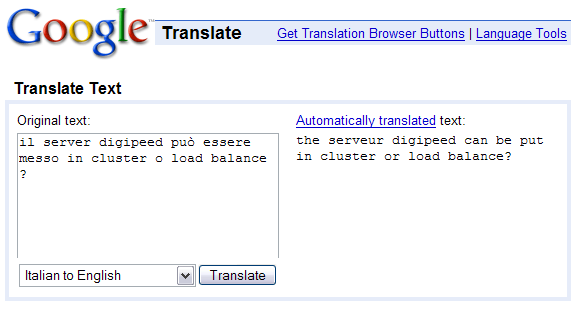
The end of the session featured questions and answers; attendees submitted written questions. Stefan is very well versed in our system and was able to answer most of these, but I wanted to chip in. Again, the language barrier presented a problem--this time, technology had an answer. I had a browser window opened to Google Translate. I copied the questions in there, translated to English, then interpreted what the slightly-garbled result was supposed to ask.

For example, "il server digipeed può essere messo in cluster o load balance ?" translated to "the serveur digipeed can be put in cluster or load balance?", which I took to mean "Can you load balance or cluster the Digipede Server?" (The answer is "Of course, it can be clustered for failover or scalability [but unless you have thousands of agents, you don't need to cluster for scalability]).

In the end, the webcast went great. Stefan introduced Grid Computing for .NET to an entirely new audience, and he provoked a lot of interest (there were many good questions at the end of the session, which always indicates that the speaker was compelling). Thanks for putting up with the difficulties Stefan!

Photo credit: darnok

Technorati tags: , ,

Tuesday, December 05, 2006

HPC in Finance Event Tomorrow in NYC!


All week I've been meaning to write about this, and now it's probably too late. But for those of you who wake up in New York and read my blog first thing in the morning just to see what you should to today, this post is for you!

Wednesday, December 6th, Microsoft is hosting an event called How to Harness the Power of High-Performance Computing in Financial Services at 1290 Avenue of the Americas - 6th floor, New York (that’s between 51st and 52nd street in the Axa Equitable building.

The event will include actual customers who are using high performance computing on Wall Street. There will be a couple of Digipedlians there and several customers--if you want to hear from a user's perspective, this is your chance. They'll talk about how customers are using our product along with Microsoft's cluster operating system (Windows Server 2003 Compute Cluster Edition).
Details:

Date: Wednesday, December 6, 2006
Time: Welcome, 8:30; event 9:00 AM to 2:00 PM
Location: Tavern on the Green Conference Room, 1290 Avenue of the Americas - 6th floor, New York (that’s between 51st and 52nd street in the Axa Equitable building)

Register here.

Technorati tags: , , ,

Tuesday, November 28, 2006

The business of grid

T
  his blog tends to cover more of the technical-side of grid computing than the business side, and nearly every webcast I've given has been technical.

For those of you who are interested in the business side of grid computing, here's a webcast for you:

Grid Computing in Financial Services--Toward True IT Agility will be an executive level webcast on grid computing in financial services. The speakers include Eric Kristoff (Director of IT from UBS), Stevan Vidich (Industry Architect from Microsoft), and Digipede's own John Powers.

Date: Thursday, November 30th, 1-3pm EST (10am-12pm PST).

You can listen for free or participate for a fee. Either way, register here.

Technorati tags:

Thursday, November 09, 2006

Super! Thanks for asking!

S
  upercomputing 2005 was my least favorite conference of that year--nothing wrong with the content, which was superlative, but the Seattle Convention Center just wasn't ready for a conference as big as this one was.

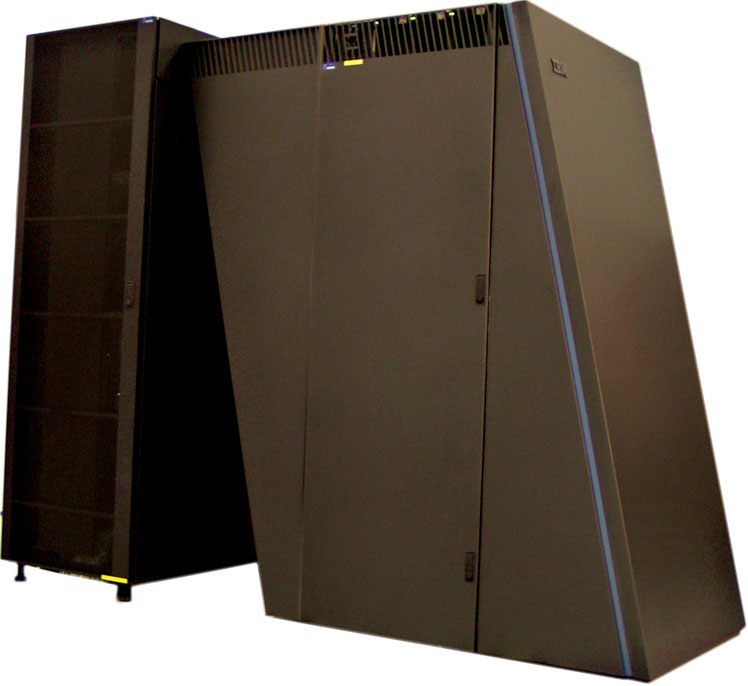
The content was great. Amazing numbers of incredible computers crowded the show floor. Bill Gates gave the keynote. I got to see a Blue Gene.

I'm hoping that SC06 in Tampa will be even better.

Even though more of our customers are doing what I consider to be enterprise computing (the storm simulations run by the Army Corps of Engineers are a notable exception), John Powers and I will be at the conference. We'll spend most of our time in the HP booth, where John will be doing some speaking and where I'll be demonstrating our software.

I'm looking forward to meeting more of the folks from Microsoft (I'm sure they'll have a big presence again), and possibly running into some of my fellow HPC bloggers.

Call me (510-816-7551) if you're in Tampa and want to meet up and talk grid! Or, stop by the HP Booth and catch a demo of our stuff in action.


Technorati tags: ,

S-S-S-Something from the comments!


L
ast Friday's item about Amazon's web services being more important than YouTube generated some interesting comments.

First, of course, was Bill Boebel's comment that his company is now using all 3 of Amazon's web services (see my follow-up post).

Later, Jeff Richards (of Verisign, now blogging at Demand Insights) asked if I lump Salesforce.com's AppExchange in with Amazon's web services. The answer is, by and large, yes. They're creating a platform on which people can build their own online apps. They've got a different angle, though. First of all, the applications built on AppExchange are "pre-integrated with Salesforce." What does that mean? Well, it seems to mean that they're encouraging companies to help Salesforce increase their footprint in the market. You don't write just any app with AppExchange--you write apps that use the principles and entities in Salesforce.

That's not a critique of the system, by the way. In a way, it's genius. They are encouraging other ISV's to increase the value of the Salesforce platform by adding functionality to it.

On the other hand, it doesn't seem like a general development platform--it's geared toward a certain set of applications (and toward people who are using Salesforce already).

Amazon, on the other hand, has developed a completely neutral set of services. Using them doesn't make you more likely to buy a book from Amazon. And, if you build a great app on top of AWS, there's no chance that Amazon will subsequently release software with the same features as yours--the developers running on AppExchange have no such assurances. If you write the next great add-on for Salesforce--you may find that Salesforce decided they need to compete with you!

Next comment: the always entertaining Muli Koppel notes that I missed the most interesting Amazon service of all: Mechanical Turk.
Personally, though, I consider S3, EC2, and SQS as examples for Innovative Execution - amazing, fantastic, chapeau etc. - and yet somewhat inferior to Amazon's Mechanical Turk, which is a sensational breakthrough not only on the practical packaging and delivering level (the other three), but also on the social, economical, existential, anthropological, philosophical and whatever else *-ical level that is relevant to our future life.
As usual, he hit the nail on the head. While S3, EC2, and SQS break barriers, MT breaks an entire paradigm: the idea that computers can't do what a person can do.

I have yet to hear how people are using MT, but I'd love to hear some stories.

By the way, I have to relate one secret about the concept of humans powering computers (a la Mechanical Turk): I invented it. Well, kind of.

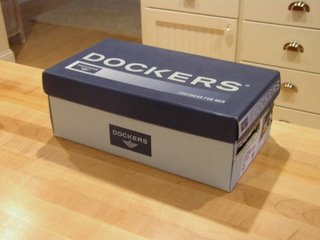
As a kid, I loved to pretend I was an inventor. One thing I "invented" was a "computer" you could put any math problem in--you simply wrote the problem on a piece of paper and slipped it through a slot. After a while, the piece of paper would slide back out--with the answer written on it. Of course, the "computer" was a decorated shoebox, the "brains" behind the computer were my own, and it was limited to the math problems that my 2nd grade mind could handle.

It also, of course, lacked a web service interface.

Still, in my own way, I think it was prescient of things to come...

[Image borrowed from here. There's a good shoebox computer story there, too]

Tuesday, November 07, 2006

Putting your money where my mouth is...

B
ill Boebel, CTO of Webmail.us commented on my post Friday about Amazon and YouTube. Apparently, he liked it a lot.

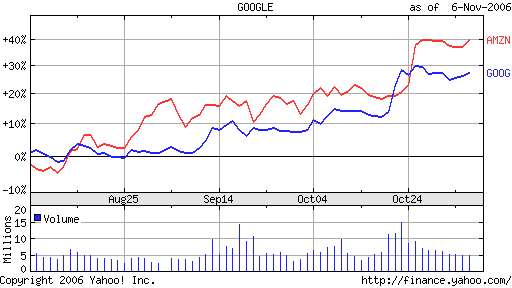
This morning he posted that he has sold half of his GOOG and is putting the money into AMZN--simply because he believes that the innovation going on at Amazon is the platform of the future.

Bill's betting a lot more than his personal account. As he indicated in his comment on my post, Webmail.us just released a new data backups system built on all 3 Amazon web services. (There's a great writeup here.) Bill isn't just guessing that Amazon's platform will succeed--he's experienced it, and he's bet his company on it.

Personally, I'd bet with him.


Technorati tags: , , , , ,

Friday, November 03, 2006

Believe it or not: it's even more important than YouTube


W
  hile the blogosphere has spent the last few weeks frothing at the keyboard about YouTube, BusinessWeek magazine has put out a thoughtful piece on Amazon's "WebOS" strategy. Check it out, and check out Read/Write Web's analysis.

For a month or so now, the web community has been holding up YouTube as the pinnacle of Web 2.0 successes; I may agree, but only in the everything-is-overvalued-during-a-bubble sense of Web 2.0. YouTube is not groundbreaking technology. It's not groundbreaking social networking. They did a great job of combining the two, however, and got immensely popular extremely quickly. However, like every other social networking site, they will lose that popularity soon enough. YouTube won't be cool forever. And their technology won't make them the defacto medium for video distribution--it's too easy to imitate.

Meanwhile, and with about 1/100th of the fanfare, Amazon has been putting forth some absolutely groundbreaking products: Simple Queuing Service, Simple Storage Service (S3), and Elastic Compute Cloud (EC2). While the names are completely unimaginative, the products themselves define an entirely new platform for developing online software (I'll refrain from calling it Web 2.0).

By utilizing Amazon's platform, small companies gain tremendous advantages: they use a development platform specifically designed for online delivery, they get access to a scalable and robust hardware infrastructure, and (perhaps most important for startups) they get pay-as-you-go, only-pay-for-what-you-use access to that infrastructure.

And the innovation doesn't end there: Amazon is revolutionizing this industry by leveraging their own infrastructure in a way that enhances their business model. Over the last decade, Jeff Bezos and company have built one of earth's largest sets of datacenters to support earth's largest online retailer: now they are renting out time on that infrastructure. It's gone from being a cost center to a revenue generator. Their expertise in hosting, which was previously dedicated to keeping their uptime numbers up, is now helping to sell product (computer time, storage space, etc) directly.

And, of course, they've invented what is in effect a WebOS and development platform.

Sun is dabbling in this market too, but in a much less revolutionary way. Microsoft and Google have both built ginormous data centers, but neither has made such revolutionary steps toward selling time on them. And neither, as a matter of fact, has gone as far in creating a platform for other companies to use in creating their Web 2.0 software.

So the blogosphere can keep writing about YouTube, right up until YouTube ceases to matter because no one goes there anymore. In the meantime, Amazon is quietly changing the way we'll do business in Web 3.0.

Thursday, November 02, 2006

What Does This Mean for .NET? (updated)


R
ed Herring is reporting that Microsoft and Novell are in talks, and that Microsoft is considering a plan to offer sales support for SuSE Linux. Also: Microsoft and Novell "plan to simplify running the Windows operating system and Suse Linux on computers."

Since both Windows and SuSE already run on computers, I can only assume they mean "on the same computer."

I think this is very interesting, and probably good news. The questions I have are all .NET related:

What does this mean for .NET on Linux? Mono? Something else?

I would love to see Microsoft promoting .NET on another operating system: it would be a tremendous boon to the .NET platform. This seems like the perfect opportunity to me.

Update 2006-10-31 3:25: Savas wonders if the references to "providing patent coverage" means that they are "letting Mono free." I hope he's right. I fear that Scoble is closer to correct: Microsoft is doing some CYA with respect to some of Novell's patents.

Technorati tags: , , , ,

Wednesday, November 01, 2006

Unexpected Nuggets: Vogels and Norton


I
t's been about two weeks since I last blogged, which I think is a record since I started blogging. That just means that things have been very busy at work (oh, and I had an amazing trip to Vegas with my rock star friends).

And now I have time for just a quickie.

In the last two days I learned something unexpected from two feeds that I read: Ken Norton's Hey Norton and Werner Vogels's All Things Distributed.

First: I learned where Ken works. I read his feed because he's one of the few people around who write a meaningful product management blog. While I've found his content (both about product management and about more personal things) interesting, I've never delved deeply enough to even find out where he does his product management. Well, this week he announced that his company, JotSpot, had been acquired by Google. It's funny that I never knew where he worked--we may have crossed paths at some point: JotSpot and Digipede were both featured at Demo@15. Anyway, congratulations to Ken and the JotSpotters newest Googlers.

Second: I read Werner's feed primarily for his insights into distributed computing. Today's post, however, gave me a new insight into product management. Werner discusses Amazon's process for product definition (whether that product is something that faces the public or even an internal web service): they work backwards. First they write the press release, then they write a FAQ, next they define the customer experience, and finally they write the user manual. Only then do they begin development.

The result?
Once we have gone through the process of creating the press release, faq, mockups, and user manuals, it is amazing how much clearer it is what you are planning to build. We'll have a suite of documents that we can use to explain the new product to other teams within Amazon. We know at that point that the whole team has a shared vision on what product we are going the build.
It's a great perspective on how to ensure that you are building the right product for the right reasons. I can't wait to try it out.

To sum up: two great writers, two great blogs. If your oapmeal doesn't include some Norton and some Vogels, subscribe!

(oh, the picture of the Lamborghini Murcielago. Part of my amazing weekend was having my buddy Sam take me for a ride in one of those. Umm--wow).

Technorati tags: , ,

Monday, October 16, 2006

Yes, Mom, your copy is in the mail...


I
'm a published author!

After reading of Nick Carr's hilarious take on the word "blogger" this weekend, I'm proud to be able to give myself a different moniker this week: published author.

Robert and I wrote an article for Dr. Dobb's Journal, and it's in the November issue (which, with the time-travelesque publishing schedules, is already out).

The title of the article is "Scaling SOA with Distributed Computing;" it's a look at a real-world customer who implemented a Service Oriented Architecture on a grid. It's worth reading for anyone who is in the process of implementing an SOA or is considering the scalability issues of SOA.

Technorati tags: ,

Friday, October 13, 2006

Bigger Is Better. But Two Is Twice as Nice.


E
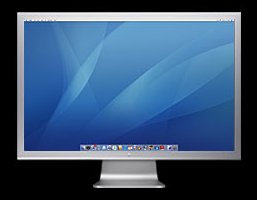
 veryone is all a-flutter about the study (commissioned by Apple, reported here in Computerworld) that found that 30-inch monitors make users more effective.

Some people doubt the validity, but I don't doubt it at all.

Have you ever walked onto the trading desk of any financial services firm? Four flat screens per person is considered a normal workstation. Six isn't unusual. I was at one of our customer sites recently, and many traders had eight monitors (two rows of 4). The reason? It makes them more productive. It puts more information in front of their eyes rather than behind other windows. It allows the users to multitask.

Duh.

I only use a paltry two-monitor set up, but I can tell you that adding that 2nd monitor had a huge effect on my productivity.

I'm always amazed when I walk through Microsoft's San Francisco office and I don't see two monitors on every desk--I know Scoble used to harangue management to give 2 monitors to employees, but it hasn't happened yet.

Now, the funny thing about Apple's study is that they didn't study increasing screen real estate in general--they studied the effect of having a $2,000 30-inch Apple Cinema HD Display. Granted, these are beautiful monitors.

But: pssst! Here's a secret: You don't need one! Buy a second 17" display, and see how much you like it.

Photo credit: kinderkram

Technorati tags: ,

Thursday, October 12, 2006

Code Camp Redux

M
  any thanks to the enthusiastic learners who showed up to my session at Silicon Valley Code Camp over the weekend. It was early on a Sunday morning, and I'm glad 15 or so of you found your way into my classroom.

The topic was .NET Development and Excel Services, and I think it was very well received. It had a better curriculum than the MSDN Webcast (which is available for download here) I had done the previous week. In my MSDN session, I bit off more than my audience could chew. I was explaining uses of grid computing to scale UDFs behind Excel Services. It's a very cool topic, and in the coming couple of years it's going to help a lot of people...but it's too early for that now.

Most people (even developers and Office power users) don't really know what Excel Services is all about. Informal polls at both my webcast and my Code Camp session proved that. So, in trying to explain why grid computing will be an important tool for people writing UDFs, I was really a few months too early. At Code Camp, I just talked about writing .NET add-ins for Excel Services, and that in itself was plenty to fill up an hour!

All in all, I had a great time at Code Camp. Attendees are always very enthusiastic, so the atmosphere is great for speaking. I received an invitation this week from Jason Mauer to do a session at Code Camp Seattle v2.0 (I spoke on grid computing at v1.0).

Arg! I wish I could. I've got a bunch of travel coming up, both personal (hanging in Vegas with my rock star friends) and professional (no links here, but some exciting trips on the near term horizon). Have fun at camp, Jason.

Technorati tags: ,

Thursday, October 05, 2006

"We Are the CITs So Pity Us...


...the kids are brats the food is hideous!"

So sang the counselors-in-training in the 1979 movie Meatballs. I assume that the conditions at this weekend's Silicon Valley Code Camp will be better! Silicon Valley's best and brightest certainly won't be brats--they're all attending on a weekend because they like this sort of thing. Plus, the food is being provided courtesy of Microsoft, Amazon, and Exact Software--they'll do better than the "some kind of beef" served at Bill Murray's summer camp back in 1979.

I've got a good hunch that the instruction at SVCC will be better than at Camp Northstar, too. Taking a look at the presenters page, I see .NET notables like Juval Lowy; evangelists from heavy hitters such as Amazon, Microsoft, and Yahoo; Bay Area developer stalwarts like Chuck Berg; and a ton of other folks, too.

My colleague Kim and I are both giving sessions. Kim is giving two: VS2005: Debugging Tips and Tricks at 10:45 on Sunday, and Concurrent Software Development at 1:15. My talk is Sunday morning at 9:15, and is entitled .NET Development and Excel Services.

There are terrific sessions both days, and it's being held this Saturday and Sunday at Foothill College in Los Altos. I highly encourage software developers in the Bay Area to attend this totally free event!

Register here.

Technorati tags:

Wednesday, October 04, 2006

Webcast Resources

T
hanks to everyone who attended my MSDN webcast today.

The intro was really quite exciting (although people on the webcast couldn't tell). For some reason LiveMeeting wasn't working properly on my machine; I couldn't "share" applications or my desktops. Since the idea of giving a talk with no demonstrations wasn't appealing to me, I had to reinstall and reboot--all of this in the 10 minutes before the webcast began! As Tracey was beginning the introduction, I was still setting up the two Visual Studios, two command prompts, remote desktop session, Excel 2007, etc. We cut it close, but we made it!

Here are the links I promised:

Excel Services overview

Free Developer Edition of Digipede Network
  • Full-featured version of the Digipede Network, free for developers: here
Great Excel blogs
  • Shahar Prish writes about Excel Services here
  • David Gainer (and many other members of the team) write about Excel 2007 here
My only regret with this webcast was that I had too much material: an introduction to Excel Services, an introduction to grid computing, and "two great tastes that taste great together" was a lot to accomplish in 55 minutes. For people who felt like they want more of an introduction to grid computing, I highly recommend reading all of my posts. ;-)

Alternatively, I suggest you watch my previous two MSDN webcasts: Object-Oriented Programming for Grid: Grid Computing for .NET and Advanced .NET Programming for Grid Computing.

They're each an hour long. They give a good grounding in grid computing on the .NET platform.

And, of course, if you're interested in a webcast about our product, you can always sign up for one of our webcasts here.

Technorati tags: , ,

MSDN Webcast This Morning

A
  re you looking for a good time this morning? I'm giving my third MSDN webcast at 10:00am; the title is "Using Grid Computing to Scale Excel Services". Register here.

Sign up!